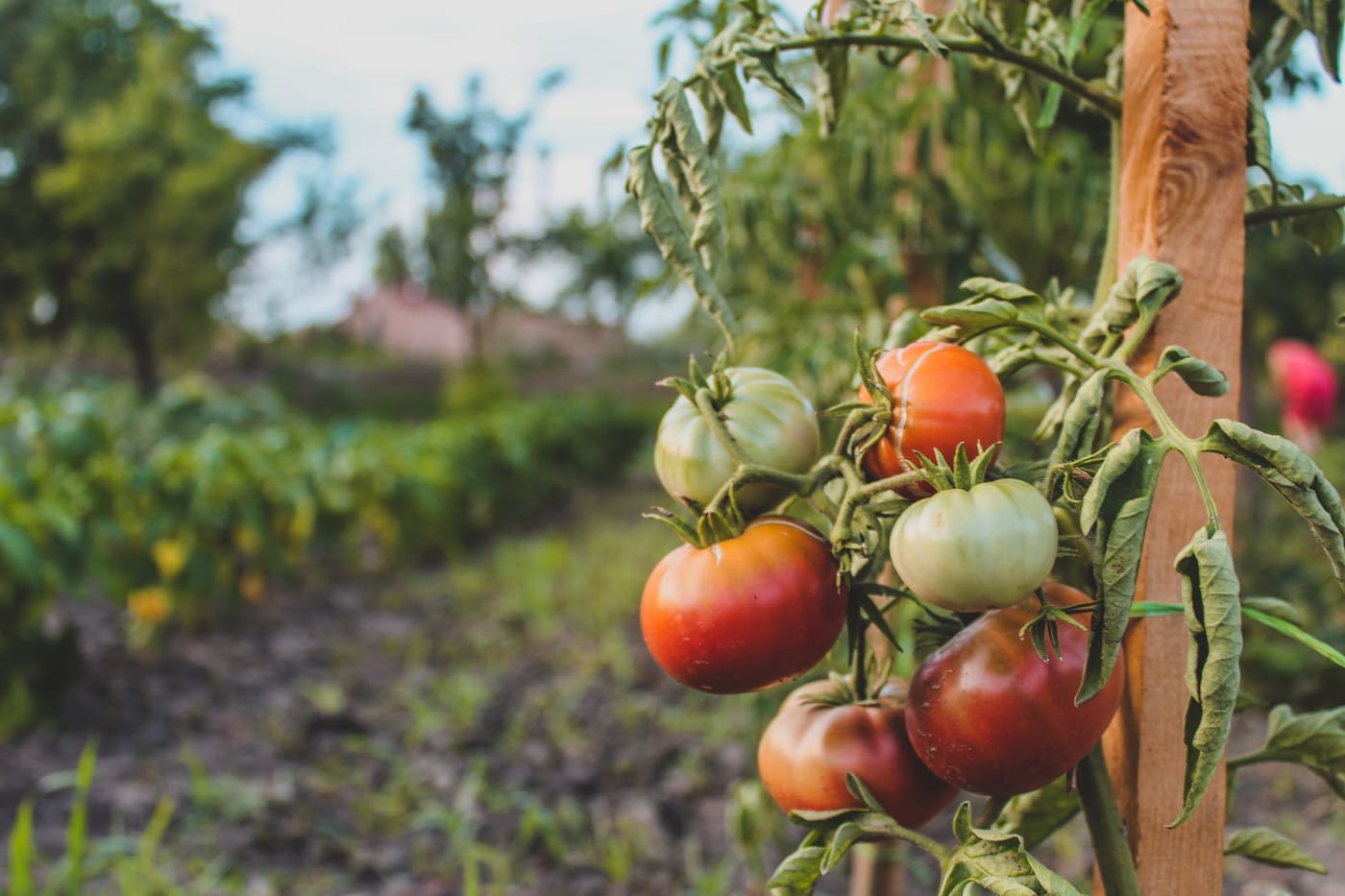
Tomato leaves turn yellow most often because of uneven watering, a nitrogen shortage, or a fungal disease such as early blight or septoria leaf spot. The pattern tells you which. Yellowing of the oldest, lowest leaves is often normal aging or low nitrogen, yellow leaves with brown spots or rings suggest disease, and yellowing all over with wilting points to a watering or root problem.
Do not rush to fertilize or spray. Treating the wrong cause is the most common way to make a tomato plant worse. Work through the clues in order: where the yellowing is, what the leaf looks like, and what the soil and weather have been doing.
Read the pattern first
Where and how the yellowing shows up narrows the cause quickly.
| What you see | Likely cause |
|---|---|
| A few lowest leaves yellow, rest of plant healthy | Natural aging, or shading from upper leaves |
| Lower leaves yellow evenly, then the whole plant looks pale | Nitrogen shortage |
| Yellow leaves with brown spots, target-like rings | Early blight |
| Small dark spots with gray centers, then yellowing | Septoria leaf spot |
| Yellow between green veins on newer leaves | Possible nutrient or pH problem |
| Yellowing with wilting, even in damp soil | Overwatering, poor drainage, or root rot |
| Yellow, curled leaves with fine webbing | Spider mites |
| Yellowing on one side of the plant, brown streaks inside a cut stem | Fusarium or verticillium wilt |
Photograph the plant and compare over several days. Slow change usually means nutrition or disease; a sudden change after a weather swing often points to water or temperature.
Natural aging and shade
A few yellow leaves at the very bottom are often normal. As the plant grows, the lowest leaves get shaded and the plant pulls nutrients from them to feed new growth. If the rest of the plant is green, growing, and setting fruit, you can pinch those leaves off. Removing the lowest foot or so of leaves also improves airflow and keeps soil from splashing onto leaves, which spreads disease. Do it in dry weather with clean snips.
Watering problems
Water stress is the most frequent cause. Soggy soil starves roots of oxygen, so leaves yellow and droop and the plant looks as if it is dying of thirst. Too little water causes yellow, crisp leaves and dropped flowers. Swings between dry and wet cause cracked fruit and blossom-end rot (dark, leathery patches on the bottom of the fruit), and stress leaves as well.
Tomatoes do best with consistent moisture, a common guide being around an inch of water a week from rain and watering together, applied deeply at the base, with more in heat and in sandy soil. Mulch a few inches deep with straw or shredded leaves to even things out. In pots, tomatoes can need water daily in summer; see how often to water container plants in hot weather. If beds stay soggy, test drainage with this simple percolation test.
Nutrient problems
Tomatoes are heavy feeders, and shortages show up in recognizable ways.
- Nitrogen: lower leaves go uniformly pale yellow first and the plant looks light green and slow. A balanced fertilizer or compost often helps, but too much nitrogen gives you lush leaves and little fruit, so follow the label.
- Magnesium or iron: yellowing between green veins can hint at these, though it is often a pH or root problem rather than a true shortage.
- Potassium: yellow, scorched leaf edges and poorly ripening fruit.
A lab soil test, available through many cooperative extension offices, shows pH and nutrient levels and removes the guesswork. Tomatoes generally prefer slightly acidic soil, around pH 6.0 to 6.8. Do not add Epsom salts, lime, or extra fertilizer on a hunch. See what makes good garden soil for building fertility with compost.
Fungal and bacterial disease
Several diseases begin with yellowing.
- Early blight: dark brown spots with concentric rings, surrounded by a yellow halo, starting on the older, lower leaves.
- Septoria leaf spot: many small round spots with dark borders and tan or gray centers, spreading upward from the bottom, especially in wet weather.
- Late blight: large, irregular, greasy-looking gray-green or brown patches, sometimes with white fuzz underneath in humid weather. It can spread fast, so remove and bag infected plants promptly and tell neighboring gardeners with tomatoes or potatoes.
- Fusarium and verticillium wilt: soilborne diseases causing yellowing on one side or branch, then wilting. Cut a lower stem and look for brown streaking inside.
What to do:
- Remove affected lower leaves and bag them. Do not add them to a compost pile that does not get hot.
- Water at the soil level in the morning, not on the leaves.
- Space plants well and stake or cage them for airflow.
- Mulch to stop soil from splashing up.
- Rotate: avoid planting tomatoes, peppers, potatoes, or eggplant in the same spot for about three years.
- Choose disease-resistant varieties next year. Plant tags often carry letter codes such as V, F, and N for resistance to verticillium, fusarium, and nematodes.
- If you use a fungicide, choose one labeled for tomatoes, follow the label on timing, protective gear, and days before harvest, avoid spraying open blossoms where bees visit, and keep it away from children and pets.
Wilt diseases have no cure: remove and dispose of the plant and do not grow tomato-family crops in that spot next year. Your cooperative extension office can confirm a diagnosis from a photo or a sample.
Pests, weather, and herbicide drift
Spider mites cause stippling and fine webs under leaves, aphids cause curled, sticky leaves, and whiteflies fly up when disturbed. Inspect leaf undersides in good light. Many respond to a firm hose spray, and handling common garden pests without overreacting covers the staged approach. Hornworms strip leaves but rarely cause yellowing; look for large green caterpillars and droppings.
Cold nights, sudden heat, and wind can also yellow leaves, and new transplants often show a few yellow leaves for a week while they adapt. Planting too early causes lasting trouble, so check timing in when to plant a vegetable garden. Drift from lawn weed killers is another cause: cupped, twisted, or distorted new growth can point to herbicide exposure, and the plant often does not recover well.
A step-by-step diagnosis
- Look at the pattern. Lower leaves only, whole plant, new growth, or patches?
- Check the soil. Push a finger in a couple of inches. Dry, damp, or soggy?
- Inspect both sides of leaves for spots, mites, or insects.
- Check the stem. Cut one near the base and look for brown streaks.
- Review recent events: weather swings, fertilizer, new mulch, or spraying nearby.
- Start with the mildest fix, such as adjusting watering or removing bad leaves.
- Reassess in a week. Judge recovery by new growth, since yellow leaves will not turn green again.
Change only one thing at a time so you can tell what helped. Heavy fertilizing or spraying out of worry often does more harm than the yellow leaves did.
Where this comes from
This guide draws on published tomato disease and nutrient-problem guidance from university cooperative extension programs, covering early blight, septoria leaf spot, late blight, wilt diseases, watering and nitrogen. It also reflects general horticultural practice for diagnosis and sanitation. Disease pressure, products and label rules vary by region and change over time, so confirm a diagnosis with your local cooperative extension service and follow the product label.