Your garden soil drains poorly if water stands on the surface long after rain, if a test hole filled with water drops by less than about an inch an hour, or if the ground stays sticky and wet for days. The most reliable check is a simple percolation test, which takes about an hour of effort and costs nothing.
Drainage matters because roots need air as well as water. When every pore in the soil is full of water, roots cannot breathe and begin to die. Plants then look thirsty even though the soil is wet, which is why drainage problems are so often misdiagnosed.
Signs your soil drains poorly
Before you dig anything, look at what the garden is telling you.
- Standing water. Puddles that linger many hours after a normal rain, or that appear in the same low spots every time.
- Soil that stays soggy. A handful squeezed days after rain is still wet and sticky.
- Moss or algae. A green film or moss on the surface suggests constant dampness.
- Yellowing, drooping plants in wet soil. Leaves yellow and droop even though the soil is damp.
- Stunted growth. Plants stay small with few new leaves.
- Rotten roots. Roots that are brown, mushy, and sour-smelling instead of white and firm.
- Repeated losses in one spot, especially plants such as lavender and rosemary that prefer dry feet.
Some of these also match watering mistakes or disease, so confirm with a test rather than guessing. Yellow leaves in particular have many causes, covered for tomatoes in why tomato leaves turn yellow.
The percolation test, step by step
This is the standard way to measure how fast water moves through your soil, and extension services describe versions of it.
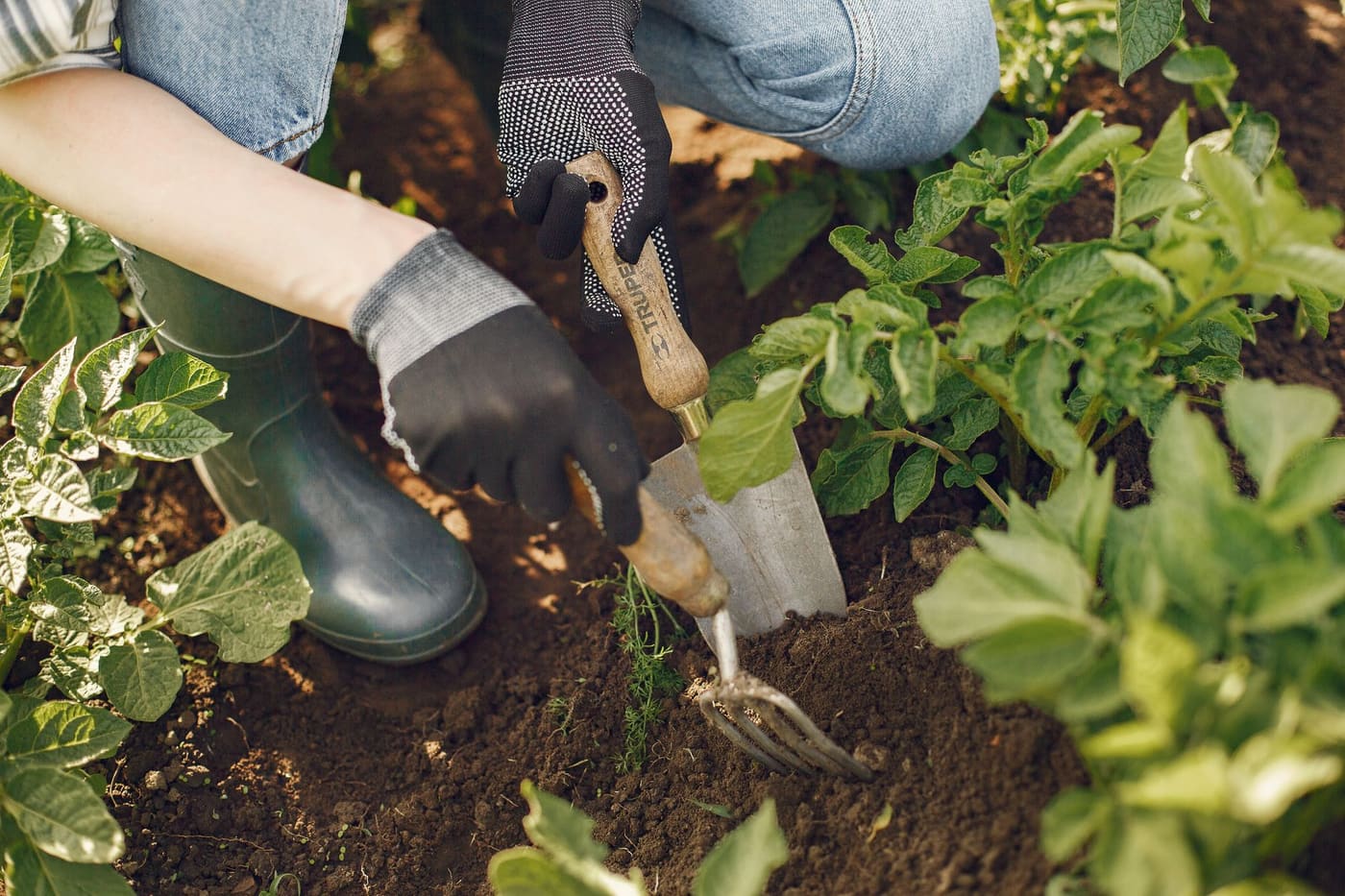
- Dig a hole about 12 inches deep (18 is better) and at least 3 to 6 inches wide, in the area you plan to plant. Avoid digging when the soil is wet, because the sides of the hole can smear and give false results.
- Fill it with water and let it drain completely. This pre-wets the surrounding soil.
- Fill the hole with water again right away.
- Measure the water depth with a ruler or stick, note the time, and check an hour later.
- Record how many inches the level dropped.
Extension guidance generally reads the results like this:
| Drop per hour | What it suggests |
|---|---|
| Much less than 1 inch | Poor drainage; improve the site or choose plants that tolerate wet soil |
| About 1 to 3 inches | Acceptable for most garden plants |
| Faster than that | Drains very quickly; the soil may dry out fast and benefit from organic matter |
Test in more than one spot, since a garden can vary a lot from side to side, and test after a few dry days, because soil already soaked by a storm reads artificially slow.
A quick hand test for texture
Texture helps explain why drainage is poor. Squeeze a handful of moist (not soaking) soil.
- Sandy soil feels gritty and falls apart when you open your hand. It drains fast, sometimes too fast.
- Silty soil feels smooth like flour and holds together loosely.
- Clay soil feels sticky and forms a ribbon when pressed between thumb and finger. The longer and stronger the ribbon, the more clay it contains.
- Loam holds together but crumbles when poked.
A jar test gives a rough breakdown. Fill a straight-sided jar about a third with soil, add water and a little dish soap, shake well, and let it settle for a day or more. Sand settles first, silt next, and clay forms the finest top layer. For how texture and structure fit together, see what makes good garden soil.
Why drainage goes wrong
Knowing the cause helps you choose the fix.
- Heavy clay. Tiny particles pack together with few air spaces, so water drains slowly.
- Compaction. Foot traffic, construction, and heavy equipment squeeze pores shut. New-build yards often have compacted subsoil.
- A dense layer below the topsoil, which acts like a bowl so water cannot move down.
- Low-lying ground. Water runs to the lowest part of a yard.
- A high water table, which in some areas sits close to the surface, especially in spring.
- Runoff from roofs and paving, such as a downspout emptying into a bed.
How to improve drainage
Pick the method based on how bad the problem is.
Mild problems: add organic matter
For clay that drains slowly but not terribly, spread a couple of inches of compost over the bed and work it into the top 8 to 12 inches, then repeat each year. Compost helps clay particles clump into crumbs with air channels between them. Avoid adding sand to clay, since small amounts of sand mixed into clay can make it more like concrete, and a very large volume is needed to help; compost is the better route.
Do not dig or till wet soil. Working wet clay smears and compacts it. Wait until a handful crumbles rather than forming a mud ball.
Moderate problems: raised beds and mounds
Raised beds 8 to 12 inches high lift roots above the wet zone. Fill them with a quality blend of topsoil and compost, and loosen the ground underneath with a fork first so water can move down. Even a mound of improved soil 6 to 8 inches high can help a single shrub.
Severe problems: grading, drains, or relocation
If water pools across the yard, the fix may be re-grading so the ground slopes away from the house, or installing a drain such as a French drain (a trench with perforated pipe and gravel). These involve digging, grade calculations, and deciding where the water goes.
Plant for the conditions
If you cannot fix the site, plant for it. Some irises, sedges, swamp milkweed, and certain shrubs tolerate wet soil. Ask a local nursery or your cooperative extension service for regional recommendations, since what tolerates wet soil in one climate may not in another.
When to call a professional
Garden drainage can become a structural issue. Get a licensed professional if:
- Water pools near your foundation, or you see damp basement walls or crawl spaces.
- You need to change grading near the house, or the problem involves a downspout, sump, or drain tile.
- You plan significant digging. Call your local utility-locating service first (dialing 811 in the US), since striking a gas, electric, or water line is dangerous.
- The area is large enough that a drainage system is required.
- Local rules apply. Permits and drainage regulations vary, and redirecting water onto a neighbor’s property can create legal problems.
Never dig or build on a septic drain field yourself; a professional can assess it.
Containers and drainage
Pots have their own version of this problem. A container without drainage holes, or with a clogged hole, holds water at the bottom no matter how good the mix is. Use pots with holes and a mix made for containers rather than garden soil, which compacts. A layer of gravel at the bottom does not improve drainage and can raise the soggy zone closer to the roots. If container plants droop, check the mix before assuming they are dry, as in how to revive wilted container plants in summer.
To run the test step by step and turn your result into a rate, use the soil drainage test checklist.
Where this comes from
This guide draws on published soil-drainage and percolation-test guidance from university cooperative extension programs, including their advice on test hole size, pre-wetting, reading results of about an inch an hour, and improving drainage with organic matter, plus the national 811 call-before-you-dig service. Soil conditions, local drainage rules and costs vary, so check with your local cooperative extension service and, for work near your home, a licensed professional.