To revive a wilted container plant, first push a finger 2 inches into the potting mix. If it is dry, water slowly and thoroughly until water runs out of the drainage holes, then move the pot out of direct afternoon sun. If the mix is already wet, do not water; the wilt may be root rot or heat stress, and more water will make it worse.
Most wilted container plants recover within hours to a day when the cause is simple dryness. Plants that stay limp after a good soak, or wilt again quickly, usually have a deeper problem such as a pot-bound root ball, a pot that is too small, or rotting roots. This guide helps you sort out which one you have.
Step one: diagnose before you water
Wilting looks the same whether the plant is too dry or too wet, so check the mix rather than assuming.
- Finger test. Push a finger about 2 inches in. Dry and crumbly means thirsty; cool and damp means moisture is present.
- Lift the pot. A dry pot is much lighter than a watered one.
- Check the time of day. Large-leaved plants such as squash, hydrangea, and tomatoes often droop in afternoon heat even when the soil is moist, then perk up by evening. That is temporary heat wilt.
- Check the drainage hole for roots poking out or a blockage.
- Smell and look. A sour smell, black or mushy stems at the soil line, and fungus gnats suggest soggy conditions.
If the soil is moist and the plant droops at midday, wait until evening and look again. If it is still limp once the sun is off it, the roots may be damaged.
Rescue a dry container
When the mix is dry, rehydrate it properly. Quick splashes often wet only the top while water runs down the sides of the pot, especially when a peat-based mix has dried out and repels water.
- Water slowly. Pour until water flows from the bottom, wait a few minutes, and do it again.
- Bottom-soak a badly dried pot. Stand it in a bucket or tub with a few inches of water for 20 to 30 minutes, until the top of the mix feels damp. This works best for small and medium pots.
- Move to shade. Give the plant a day or two of bright shade or morning sun only while the roots recover.
- Trim damage. Remove crispy, brown leaves; drooping leaves often recover.
- Hold the fertilizer. Stressed roots can be burned by it, so wait until growth returns.
Most healthy plants bounce back within a day. If leaves are still limp after that, look for deeper problems.
Rescue an overwatered or rotting container
If the mix is wet and the plant still wilts, roots may be rotting from lack of oxygen.
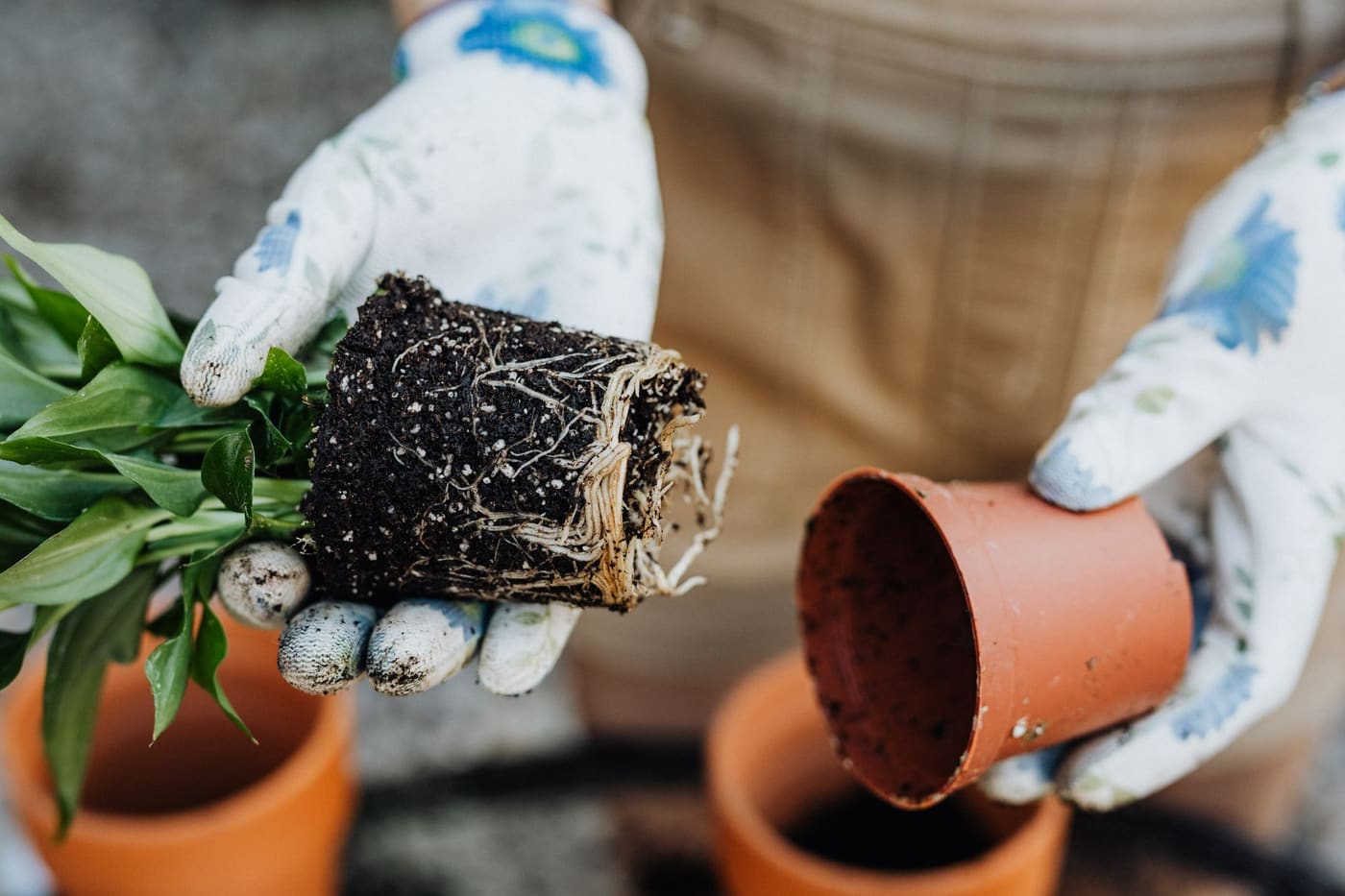
- Slide the plant gently out of the pot.
- Check the roots. Healthy roots are white or tan and firm; rotten roots are brown or black, soft, and often sour-smelling.
- Trim rotten roots with clean scissors.
- Repot in fresh, loose potting mix in a pot with drainage holes.
- Water lightly, then let the top inch or two dry between waterings until new growth appears.
- Keep the plant out of full sun for several days.
If most of the roots are rotten, recovery is unlikely; take cuttings from healthy stems if the plant allows it. Soggy pots usually come from poor mix, saucers holding standing water, or a pot too large for the plant. The same drainage logic applies in the ground, as in how to tell if garden soil drains poorly.
Heat wilt versus real trouble
| Sign | Likely heat wilt | Likely deeper problem |
|---|---|---|
| Time | Midday to late afternoon | All day, including morning |
| Soil | Moist 2 inches down | Bone dry or soaked |
| Recovery | Perks up by evening | Stays limp after watering or cooling |
| Leaves | Droop but stay green | Crisp edges, yellowing, spotting |
| Roots | White, filling the pot | Circling tightly, brown, or mushy |
Heat wilt is the plant’s way of cutting water loss and is not an emergency on its own. If the soil is moist, resist watering more.
Check for root-bound plants
A plant that dries out within hours of watering may be root-bound: roots fill the pot and leave little room for mix to hold water. Signs include roots coming out of the drainage holes, roots circling the surface, and water running straight through.
To fix it, slide the plant out and look at the root ball. If roots circle, loosen them with your fingers or make a few vertical cuts down the sides with a clean knife to encourage outward growth. Repot into a container only a couple of inches wider, with fresh mix around the sides, then water well and shade the plant for a few days. Repotting in heat stresses plants, so do it in the evening or on a cloudy day if the plant can wait. Avoid jumping to a much larger pot, which holds extra wet mix that stays soggy.
Pot choices that make summer easier
Pots affect how fast the mix dries.
- Dark plastic and dark ceramic absorb heat, and roots can overheat in direct sun.
- Unglazed terracotta breathes and dries fast, so it needs more frequent watering.
- Fabric grow bags drain and cool well but dry quickly.
- Larger pots hold more water and buffer temperature swings, so a 5-gallon container is far more forgiving than a 6-inch pot.
- Light-colored containers keep roots cooler.
A couple of inches of mulch on top of the mix slows evaporation. Grouping pots lets them shade each other’s sides, and setting them on wood or grass rather than hot concrete helps. Self-watering containers can cover a few days, but check them rather than assume they are fine.
Prevent the next wilt
- Check every pot daily in hot weather, and more often for small pots in full sun.
- Water in the morning so plants start the hot day with moisture and foliage dries before night.
- Use potting mix rather than garden soil and refresh it each season.
- Match plant size and thirst to the pot, as in what grows best in containers.
- Set up a routine with how often to water container plants in hot weather.
When a forecast shows several very hot days, move pots to bright shade for the worst of the afternoon, water deeply the evening before, and check each pot more than once a day. If you will be away, ask someone to check them. A flowering container that wilted often drops buds, so see how to keep flowers blooming longer once the plant recovers. If your area restricts outdoor watering, check local rules; hand-watering a few pots is often still allowed, but regulations vary.
To check whether your pot is big enough for the plant, try the container size and watering planner.
Where this comes from
This guide draws on published container-gardening guidance from university cooperative extension programs, including their advice on checking soil moisture by finger, watering thoroughly until it drains, pot size and material, and drainage. It also reflects general horticultural practice for root-bound and overwatered plants. Local watering rules and plant needs vary, so check with your local cooperative extension service and any rules from your water utility.